How Summer Damages Our Collagen Capital
In summer, UV rays, heat and dehydration degrade the skin's collagen. Discover how to preserve your collagen capital and support your skin in the sun.

Your sun capital is considered a lifelong asset: it is largely determined at birth, in particular by your skin type, and it does not regenerate. The damage caused by UV rays accumulates over the years, even though the skin can repair part of these lesions. And those same UV rays also gradually and cumulatively degrade your collagen capital.
What is sun capital?
In practice, repeated sun exposure and sunburns "consume" this capital. Sunburns during childhood and adolescence are particularly harmful and increase the risk of skin cancer later in life. You cannot "recharge" your sun capital, but you can preserve it by protecting yourself: suitable sunscreen, clothing, a hat, sunglasses and by limiting exposure during the sunniest hours.
The term "sun capital" is mainly a concept used in dermatology. It helps explain that the harmful effects of UV rays are cumulative throughout life.
Does summer damage your collagen capital?
Collagen is the protein that gives skin its firmness, elasticity and resilience. Summer can accelerate the breakdown of your collagen capital, mainly because of a combination of environmental factors. The skin keeps producing collagen throughout life, but this production naturally decreases with age and is slowed down by repeated sun exposure.
Here are the main mechanisms behind the ageing and breakdown of your endogenous collagen capital during summer.
1. UV rays: the main culprit
UVA rays, present all year round but especially intense in summer, penetrate deep into the skin, where the collagen and elastin fibres are located. They act in several ways:
- they stimulate the production of free radicals (oxidative stress);
- they activate enzymes called matrix metalloproteinases (MMPs) that break down existing collagen fibres;
- they slow down the ability of skin cells (fibroblasts) to produce new collagen.
The result: skin gradually loses firmness and wrinkles appear or deepen. With repeated exposure, this leads to more pronounced wrinkles, a loss of firmness and elasticity, thinner and slacker skin, pigment spots and other signs of photo-ageing.
UVB rays mainly contribute to sunburns and DNA damage, but they also take part in skin ageing. The good news: even though accumulated damage does not disappear completely, reducing UV exposure slows down future collagen breakdown.
2. Heat
Prolonged exposure to high temperatures also promotes oxidative stress and can increase skin inflammation. On its own, heat is less harmful than UV rays, but it amplifies their effects.
3. Seawater and chlorine
Salt and chlorine do not directly damage collagen, but they alter the skin barrier, promote skin dehydration and make skin more sensitive to external aggressions. Dehydrated skin often looks less plump, which visually accentuates the signs of ageing.
4. Wind and dehydration
Wind, air conditioning and perspiration increase the skin's water loss. Less hydrated skin is less supple, and fine lines become more visible.
5. Summer habits
Some holiday habits can also accelerate skin ageing:
- increased alcohol consumption, which promotes dehydration;
- smoking, which increases oxidative stress and reduces collagen synthesis;
- a diet low in protein, vitamin C and antioxidants, which are nevertheless essential to collagen production.
How to preserve your collagen capital in summer?
Here are a few simple and effective tips:
- Use a broad-spectrum sunscreen daily (SPF 30 or 50), even when the sky is overcast.
- Avoid exposure between 12 p.m. and 4 p.m., when UV rays are most intense.
- Wear a hat and sunglasses.
- Moisturise the skin with products containing glycerine, hyaluronic acid or ceramides.
- Eat enough protein and vitamin C (citrus fruits, kiwi, peppers), as well as foods rich in antioxidants (red berries, tomatoes, green vegetables).
- Consider cosmetic actives such as collagen or concentrated peptide serums, as well as topical vitamin C, which support collagen synthesis.
- Use a quality marine collagen peptide food supplement.
Summer ageing is mainly linked to photo-ageing: up to about 80% of the visible signs of facial ageing are attributed to chronic UV exposure, more than to natural ageing. By protecting your skin effectively from the sun, maintaining good hydration and a balanced diet, and taking marine collagen peptide supplements as a preventive measure, you can significantly limit collagen loss over the summers.
Does taking Collagen Vital Power in summer really help the skin?
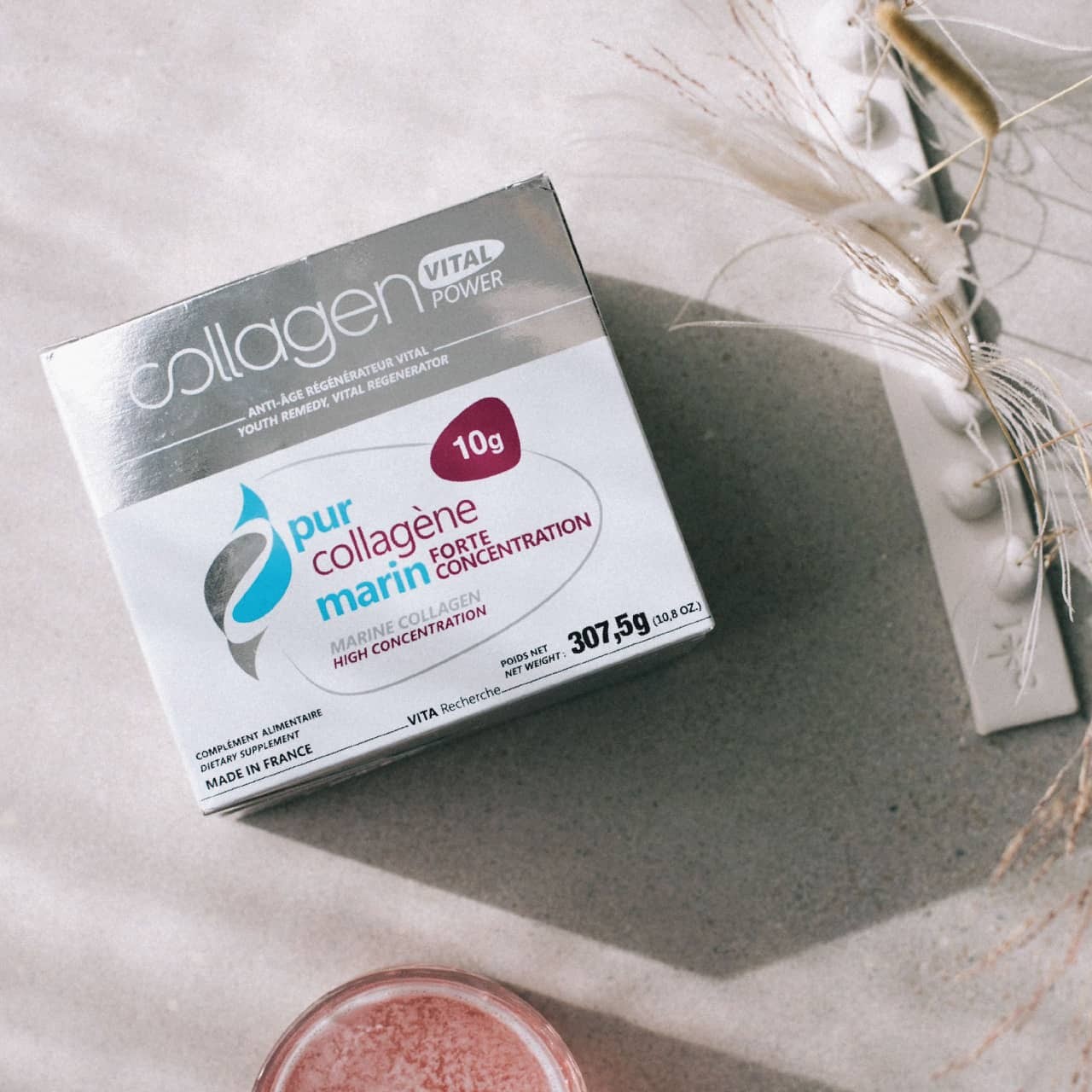
Taking hydrolysed collagen, such as the peptides in Collagen Vital Power, can be a very useful support for the skin in summer. Be aware, however: it does not replace sun protection and it does not block the collagen breakdown caused by UV rays.
What oral collagen cannot do
Oral collagen cannot stop UV rays from generating free radicals, from activating the enzymes that destroy collagen (MMPs) or from damaging the DNA of skin cells. In other words, if you spend a lot of time in the sun without protection, the benefits of the supplement will be offset by the effects of UV rays.
What the studies show
Collagen peptides (generally 8 to 10 g per day for 8 to 12 weeks) have shown, in several clinical trials, that they can:
- improve skin hydration;
- slightly increase its elasticity;
- modestly reduce the depth of certain wrinkles;
- stimulate the activity of fibroblasts, the cells that make collagen.
The idea is that the absorbed peptides act as a "signal" to encourage the skin to produce more collagen. To learn more about the benefits targeted at the skin, see our Collagen beauty and anti-ageing page.
During summer, if you take a collagen such as Collagen Vital Power, you are more likely to get a very good benefit by combining it with: an SPF 50 sunscreen applied correctly and reapplied regularly, a diet rich in vitamin C (essential to collagen synthesis), dietary antioxidants (red berries, citrus fruits, colourful vegetables) and good hydration.
The takeaway
Collagen is a supplement, not a "sun shield". If your goal is to preserve your collagen capital during summer, the order of importance is as follows:
- daily sun protection (the most effective factor);
- limiting prolonged exposure during the sunniest hours;
- getting enough vitamin C and protein in your diet;
- taking a hydrolysed collagen supplement, such as Collagen Vital Power, to optimise skin quality over the long term.
Yes, marine collagen peptides can help support endogenous collagen production and improve certain skin parameters. But collagen does not directly protect the skin from the damage caused by the sun and UV rays: it is the combination of collagen with good photoprotection that delivers the best results.
Want to go further? Discover our full range of marine collagen drinkable cures.

Related products
Collagen Vital Power