Why does the skin suffer more during winter?
Cold, wind and heating dry out skin. Learn how marine collagen (supplement + skincare) helps hydrate, soothe and smooth skin in winter.

Each year, winter puts facial skin under stress. Cold temperatures, wind, indoor heating and temperature changes dry out the skin, weaken the hydrolipid barrier and accelerate the natural breakdown of collagen.
The result is tightness, redness, dull complexion and more visible dehydration lines. To protect the skin during winter, marine collagen is a valuable ally, both as a supplement and in dermo-cosmetic care.
How does marine collagen powder help during winter?
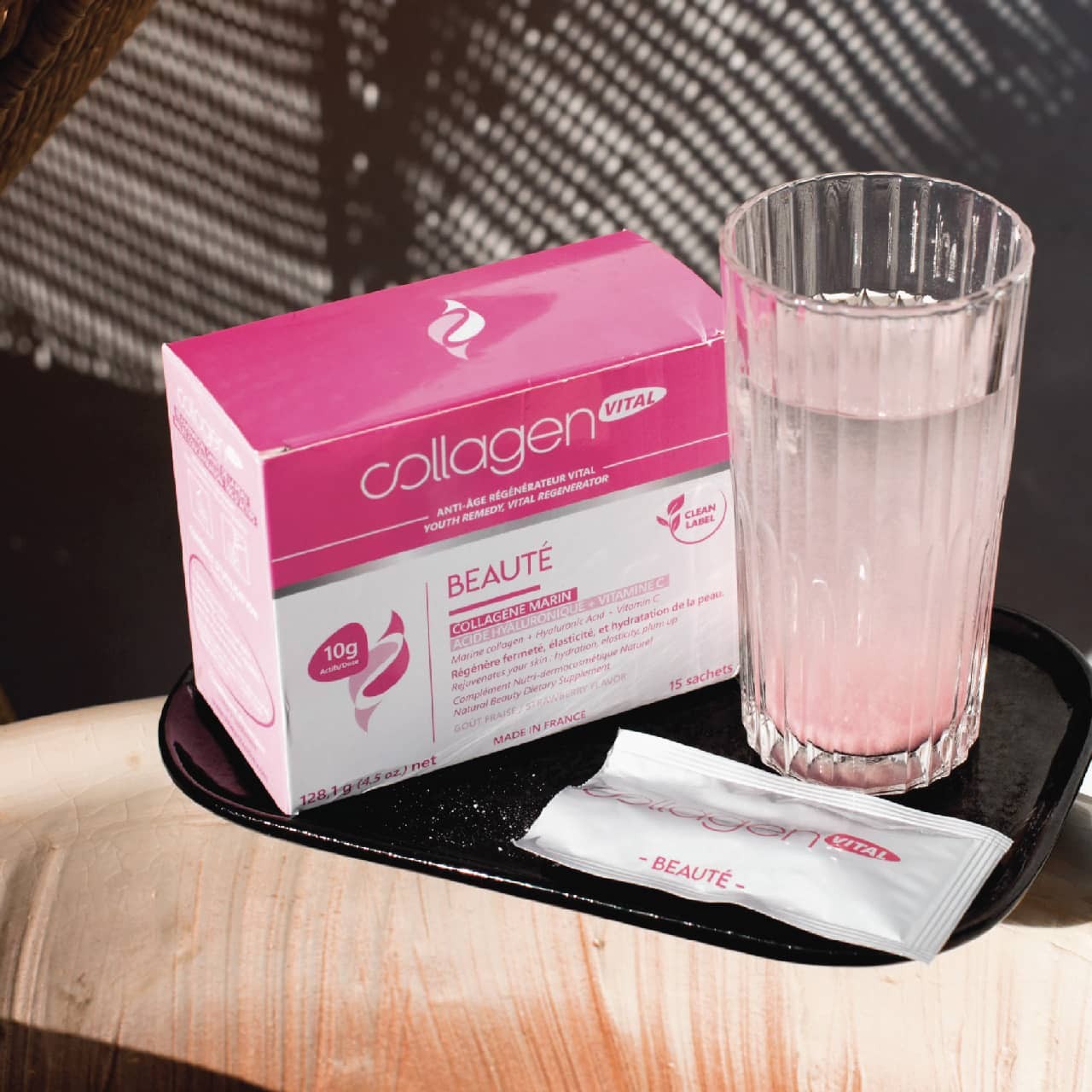
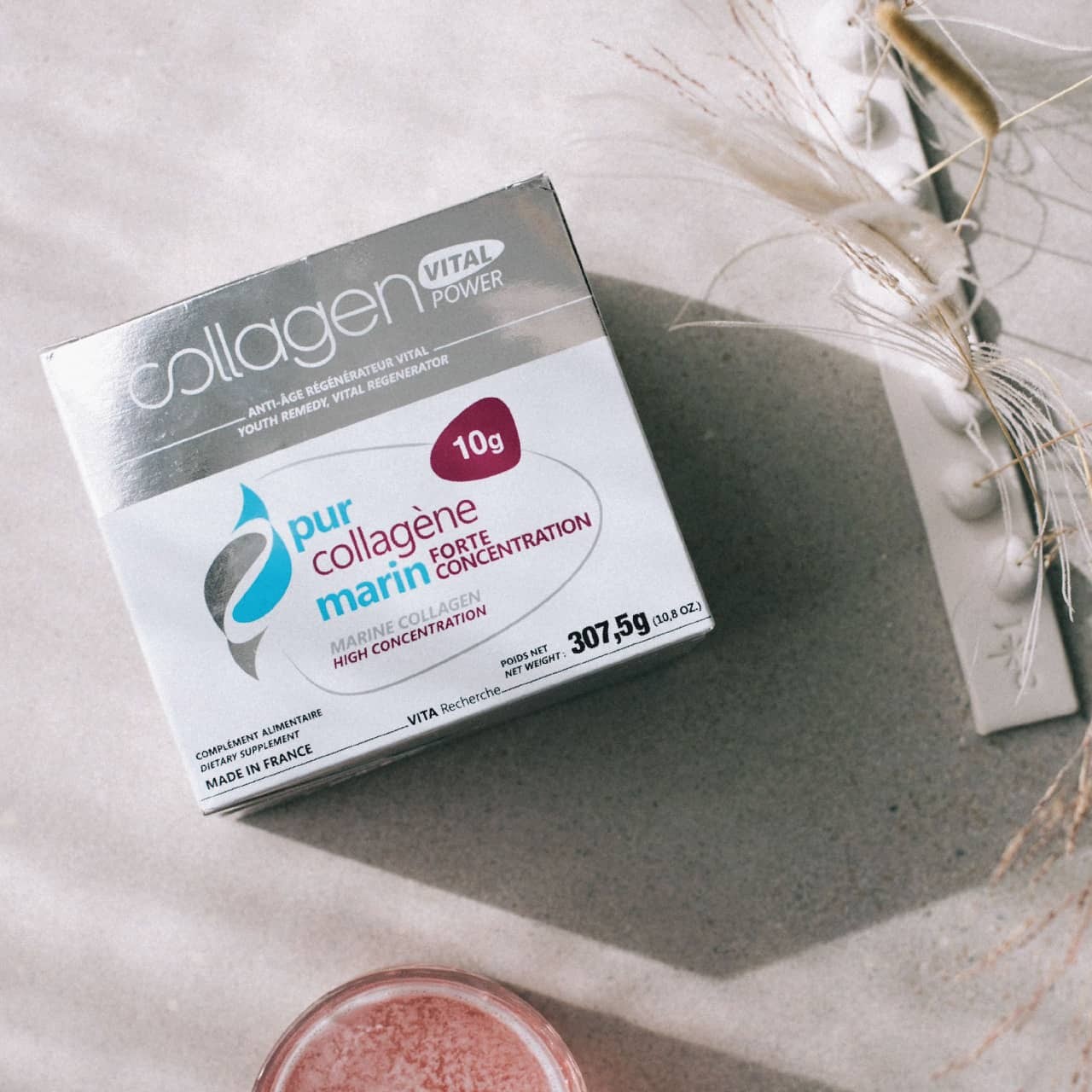
Drinkable marine collagen, especially in the form of hydrolyzed collagen peptides, works from the inside. It helps support skin structure when it is weakened by cold weather.
Benefits of marine collagen supplementation
- Improved skin hydration
- Support for firmness and elasticity
- Reduction in the appearance of dehydration lines
- Helps repair skin damaged by cold
How to choose the right marine collagen?
Choose hydrolyzed marine collagen for optimal absorption, ideally containing type I and III collagen. Sachet formats ensure accurate dosing and better preservation.
The recommended dosage is 10 g per day, ideally combined with vitamin C to stimulate natural collagen synthesis.
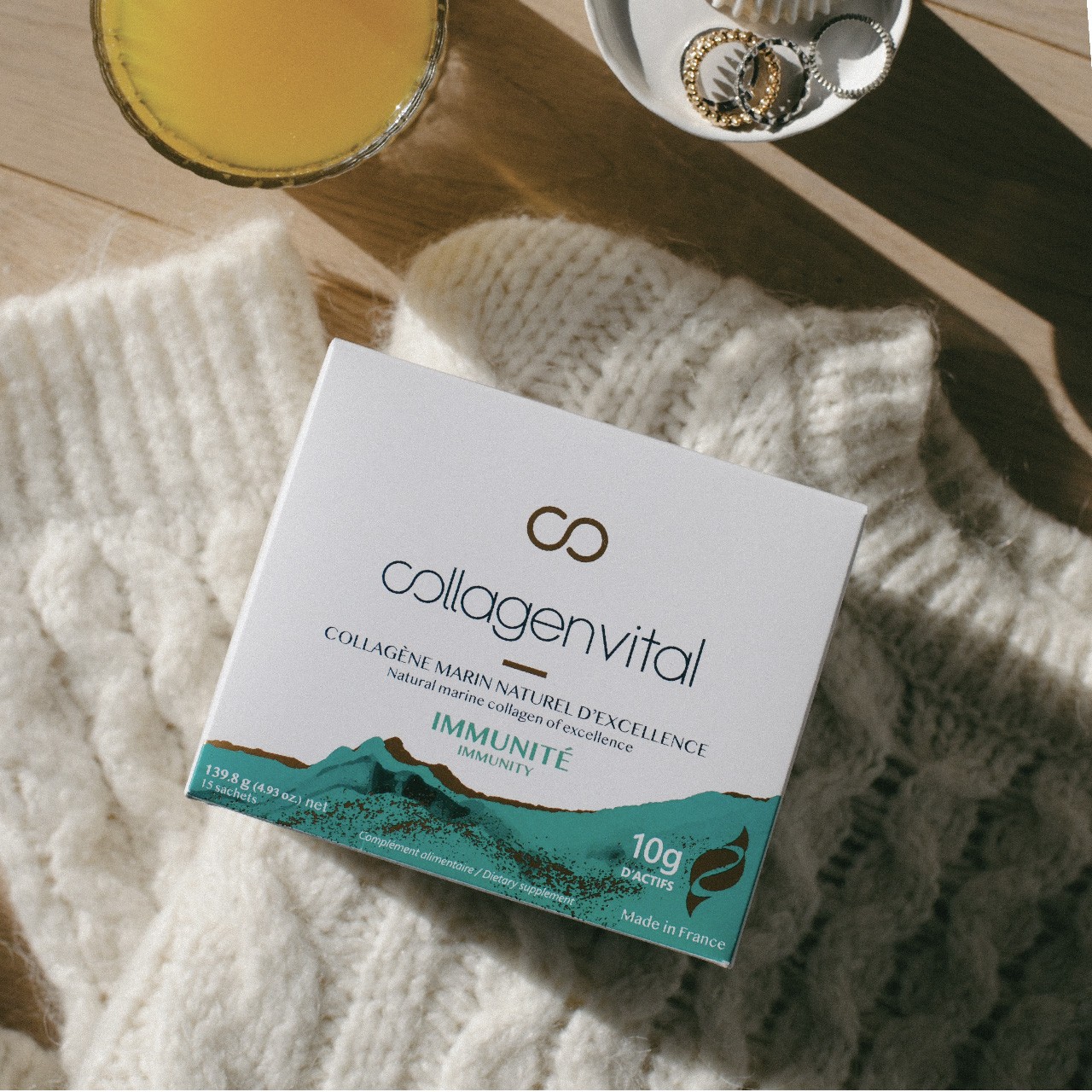
Collagen Vital Power – Immunity
Drinkable hydrolyzed marine collagen designed to support immunity and help maintain hydrated, firm and resilient skin during winter.
How to take collagen in winter?
Marine collagen should be taken daily, preferably in the morning, for a minimum 2–3 month course. It can be mixed with water, a warm drink or included in an evening routine.
Why use collagen-based dermo-cosmetics in winter?
Topical collagen does not penetrate deeply into the skin. However, dermo-cosmetic formulas often use micro-collagen, which penetrates more easily and offers targeted surface benefits.
Effects of micro-collagen on the skin
- Intense hydration (powerful humectant)
- Smoother skin texture
- Temporary reinforcement of the skin barrier
- More supple, plump-looking skin
Key ingredients to look for
- Hyaluronic acid
- Ceramides
- Peptides
- Niacinamide
- Squalane or gentle oils
In winter, apply a micro-collagen serum to clean skin, followed by a rich nourishing cream. A repairing balm can be used on very dry areas such as cheeks, nose and lips.
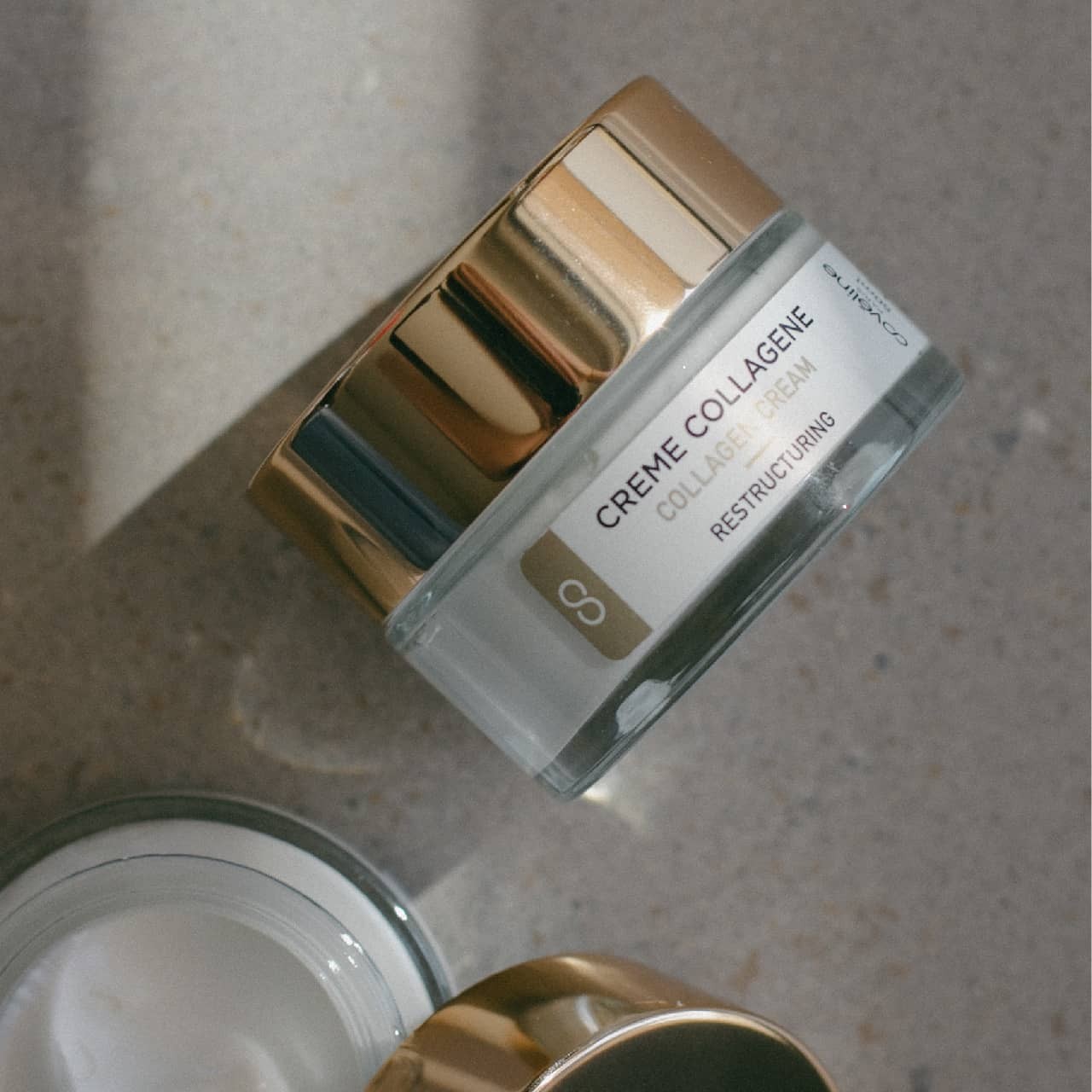
Covéline Collagen Cream
Dermo-cosmetic collagen cream designed to hydrate, protect the skin barrier and provide comfort against winter aggressions.
Complete winter collagen routine
Morning
- Gentle cleanser
- Micro-collagen or peptide serum
- Rich moisturizing cream with ceramides or peptides
- Sunscreen (yes, even in winter)
Evening
- Gentle cleansing cleanser
- Micro-collagen or hyaluronic acid serum
- Nourishing cream with peptides
- Repair balm if needed
Supplementation
Take 10 g of marine collagen peptides daily, in the morning or evening. A course of 8 to 12 weeks is ideal for visible results.
Diet and lifestyle to support collagen
- Bone broth
- Fatty fish
- Citrus fruits and kiwi (vitamin C)
- Almonds and avocado (vitamin E)
- Red antioxidant-rich vegetables
- Omega-3s: salmon, sardines, flax seeds
Drink 1.5–2 liters of water per day. Herbal teas and warm drinks are especially beneficial during winter.
Why combine drinkable collagen and dermo-cosmetics?
This dual approach is ideal in winter: collagen supplements work deeply on firmness and elasticity, while topical care protects and hydrates the skin’s surface.
Expected results after 8 weeks
- 2 weeks: better hydration
- 4 weeks: plumper skin
- 8 weeks: improved firmness and smoother skin