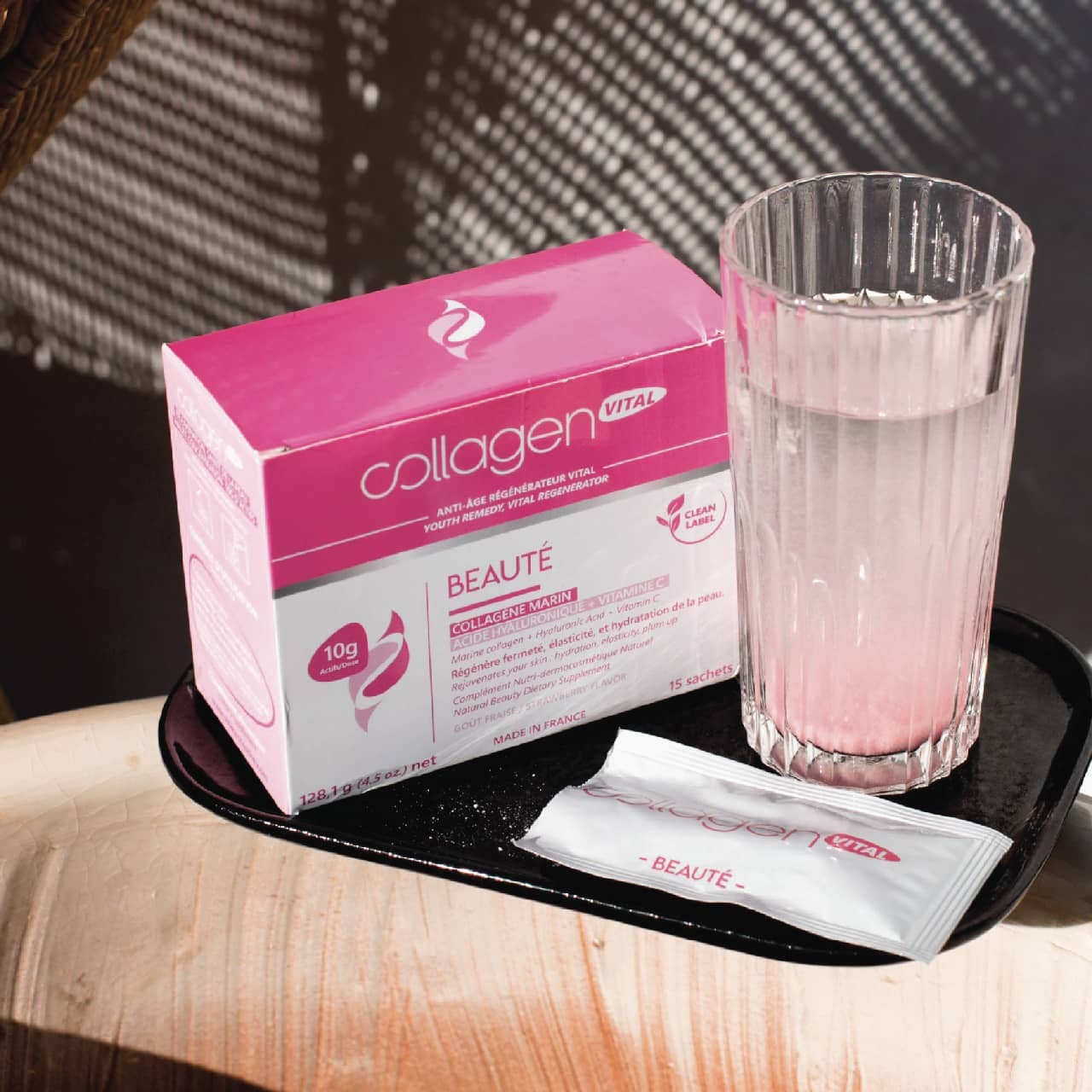
Marine collagen and acne: can it help your skin?
Acne affects teens and adults. Discover how drinkable marine collagen may support skin healing, hydration and the health of the dermis for clearer skin.
Acne is a common inflammatory skin condition that affects teenagers and adults alike. It is not a sign of poor hygiene or dirt, but depends on several factors: hormones, sebum production, skin inflammation and sometimes genetics. In this article, we look at how marine collagen can help people who are affected, starting by understanding who is concerned by this problem.
Why does acne affect teenagers and adults so much?
There are several reasons why acne affects both teenagers and adults:
- hormonal fluctuations, particularly before periods, during pregnancy or when stopping certain contraceptives;
- stress and lack of sleep, which can trigger breakouts in some people;
- a genetic predisposition, even if the parents no longer have acne;
- the use of certain cosmetics or medications, which can encourage the appearance of spots.
How does a spot form?
- Hormones: at puberty, hormones called androgens stimulate the sebaceous glands. They produce more sebum, an oily substance that protects the skin. In excess, sebum encourages clogged pores and the appearance of spots.
- Clogged pores: dead cells accumulate with sebum inside the follicles. This forms blackheads, whiteheads and sometimes inflammatory spots.
- Inflammation and bacteria: the bacterium Cutibacterium acnes, naturally present on the skin, can take part in inflammation inside a clogged follicle. The result: red, sometimes painful spots, or even cysts.
- Stress, genetics and lifestyle: stress can worsen acne, as can certain cosmetics or medications. Genetics also play a role. In some people, a high-glycaemic diet or certain dairy products may contribute to breakouts, but this varies from one individual to another.
Can acne be prevented?
It cannot always be prevented, but it can often be reduced:
- by cleansing the face gently morning and evening, without scrubbing;
- by using products labelled non-comedogenic;
- by taking a drinkable marine collagen supplement to support the balance of the dermis and skin health;
- by avoiding squeezing spots, to limit scarring.
Which solution really works against acne?
For mild acne, here is a simple routine to start with. Treatments recommended by dermatologists notably include benzoyl peroxide, topical retinoids and azelaic acid.
In the morning
- Cleanse the face gently.
- Apply a non-comedogenic moisturiser.
- Use a sunscreen with SPF 30 or more.
In the evening
- Cleanse the skin gently.
- Consider a product suited to acne, for example with azelaic acid, after asking a pharmacist or doctor for advice.
- Moisturise the skin and avoid squeezing spots.
Results usually take several weeks. If spots are painful, deep, leave scars or persist, we suggest contacting a doctor or dermatologist. Taking a drinkable marine collagen supplement can help support the balance of the dermis and skin health, while taking part in healing.
Is drinkable marine collagen effective against acne?
Drinkable marine collagen, taken in a sufficient dose and as a course, helps improve skin hydration and suppleness. According to studies on collagen peptides, it provides structural support to the dermis and potential support for the overall appearance of the skin.
Collagen notably contributes to:
- firmness and resistance: it forms an important part of the structure of the dermis;
- tissue maintenance: it takes part in the organisation of the extracellular matrix;
- skin repair: it is involved in healing processes;
- skin quality: the good condition of collagen influences the structure and resistance of the skin.
It is therefore logical to think that a healthy dermis contributes to healthy skin. Research on oral collagen supplements suggests possible benefits for hydration, elasticity and healing.
When you drink hydrolysed collagen, your body digests it into peptides and amino acids. It can use these elements to make its own proteins, including collagen. Drunk collagen can therefore reach the dermis and help correct a possible skin imbalance.
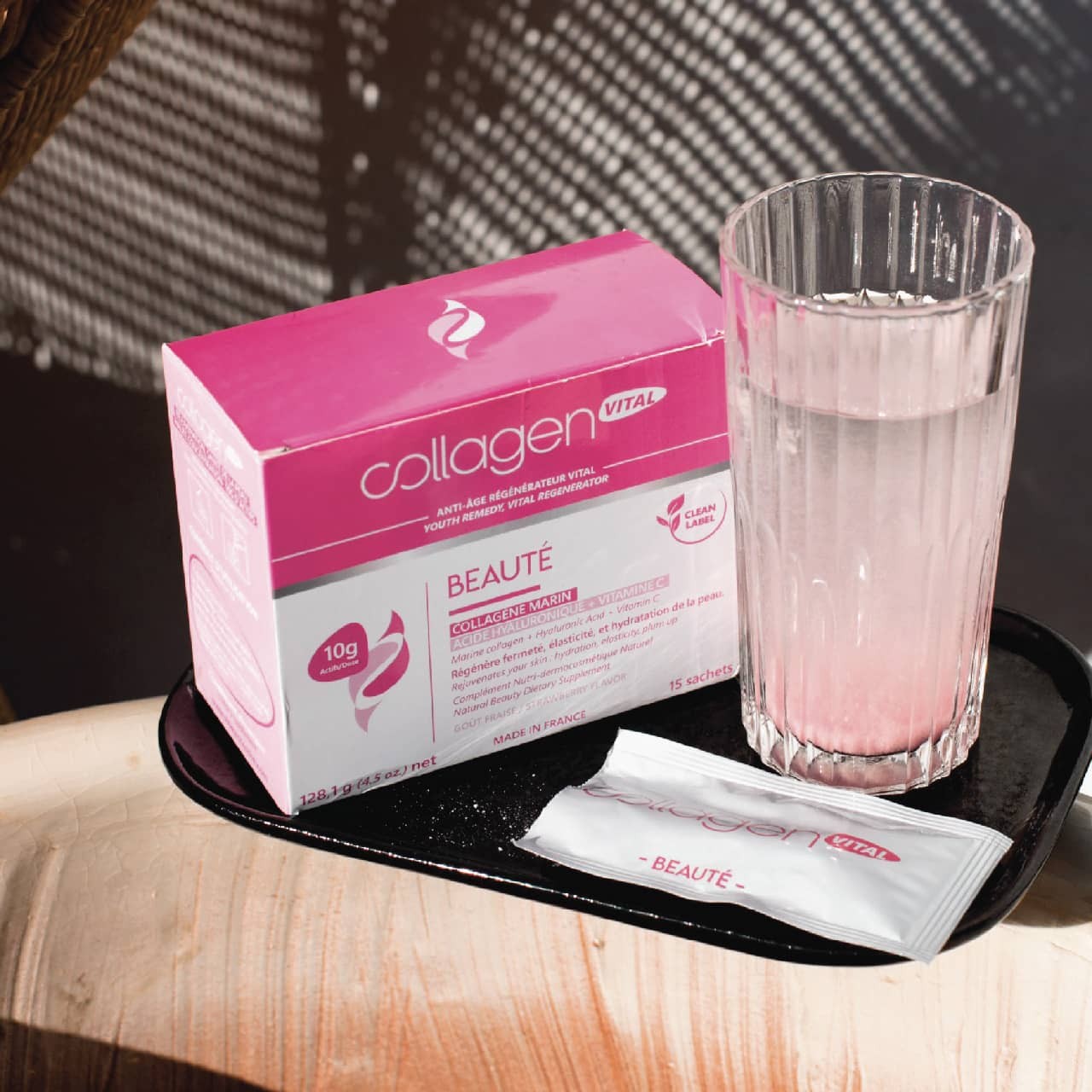
Want to care for your skin from within? Discover Collagen Vital Beauty, our drinkable marine collagen formulated to support skin hydration, elasticity and radiance. Learn more about the beauty and anti-ageing benefits of collagen.
Several criteria are needed to keep skin healthy. Collagen is one of them. It is therefore important to combine several conditions:
- a sufficient intake of proteins, such as collagen, the most important protein in the skin;
- an intake of vitamin C, because it helps the normal synthesis of collagen;
- a varied and sufficiently balanced diet;
- a well-maintained skin barrier, thanks to gentle, moisturising care;
- specific care from a specialist in the event of acne, inflammation or a dermatological disorder.
The scientific role of collagen in healing
Collagen is not simply a support material: it is an active element in tissue repair. When a lesion forms, the skin goes through several overlapping phases.
Phase 1: inflammation
Immune cells remove debris and microbes, and release signals that coordinate repair.
Phase 2: new tissue formation
Fibroblasts produce collagen and other components of the extracellular matrix. New vessels form and the cells of the epidermis migrate to close the wound.
Phase 3: remodelling
The newly deposited collagen is reorganised, broken down and replaced over time. The balance between its synthesis and its degradation contributes to the resistance and architecture of the repaired tissue.
This process is well established in healing biology. A drinkable marine collagen supplement can be of interest during this healing phase, but it does not replace the role of endogenous collagen. It can, however, provide a "signal" effect so that the body reproduces its own collagen by itself.
What happens to the extracellular matrix after an acne lesion?
The extracellular matrix (ECM) is a network that surrounds the cells of the dermis. It notably contains:
- type I and III collagen, to ensure mechanical resistance and tissue strength;
- elastin, which allows tissues to stretch and then return to their original shape;
- fibronectin and proteoglycans.
It provides a supporting role, but also regulates cell behaviour. When a deep inflammatory spot damages the dermis, three mechanisms are set in motion to repair it:
- matrix synthesis: fibroblasts produce new collagen and other components;
- matrix degradation: matrix metalloproteinases (MMPs) break down certain damaged components;
- remodelling: the fibres gradually reorganise to restore a functional architecture.
It is the balance between these different mechanisms, and the quality of collagen more than its quantity, that partly determines the quality of healing.
What does science really show about drinkable collagen?
Three levels of evidence must be distinguished.
Level 1: plausible biological effects
After digestion, the peptides and amino acids from collagen are absorbed. Some peptides can exert signalling effects on fibroblasts and could help rebuild a scar.
Level 2: clinical results on the skin
Trials and meta-analyses report possible improvements in hydration and elasticity after several weeks. A 2019 review also noted preliminary results on the healing of certain wounds.
Level 3: specific evidence on acne scars
We do not currently have robust clinical evidence to confirm that oral collagen improves atrophic acne scars. However, we know that oral collagen plays a role in healing in general.
Which techniques are used for scar healing?
Treatments for established scars may include, depending on their shape and depth, microneedling, certain lasers or other techniques carried out by professionals. Their effectiveness varies according to the type of scar and the level of evidence available.
Drinkable marine collagen can also be considered as a nutritional supplement, helping healing and rebalancing the skin by preserving the structure of the dermis.
The most interesting scientific question
If we provide the body with the elements needed to synthesise collagen, can we improve matrix remodelling after acne?
The answer is more than likely yes: it is biologically plausible. To prove it, we would need controlled trials measuring scar depth, dermis structure and matrix quality, with a placebo group and a sufficiently long follow-up.
Going further
Marine collagen is part of a global approach to skin health. To go further, discover our range of drinkable marine collagen courses and learn more about the beauty and anti-ageing benefits of collagen.

Related products
Collagen Vital Beauty