Marine collagen and longevity: can it really help you age better?
Skin, joints, glycine, healthspan: what science really says about marine collagen and longevity, and how to include it in a healthy-ageing strategy.

Longevity is no longer just about living longer. The real challenge today is to age in good health, preserving skin quality, mobility, muscle mass, joints, bones and overall vitality for as long as possible.
Within this healthy-ageing approach, collagen holds a special place. As the body's major structural protein, it contributes to the architecture of many tissues, including the skin, bones, tendons, ligaments and cartilage.
Marine collagen, in the form of hydrolysed peptides, has thus become one of the most widely studied ingredients in nutricosmetics.
But can we really talk about collagen and longevity?
The scientific answer is more nuanced than a simple "yes". Research mainly points to a benefit of collagen for certain markers associated with ageing, in particular skin quality. Some of its constituents, such as glycine, are also being studied for their role in the biological mechanisms of ageing. However, there is currently no robust clinical evidence that marine collagen supplementation directly increases human life expectancy.
It is precisely in this space between science, prevention and the quality of ageing that Vita Recherche has developed its approach, with its Collagen Vital and Covéline Paris ranges.
Collagen: a central protein in the ageing of the body
Collagen is a family of structural proteins that are particularly abundant in the body. With age, the synthesis and renewal of certain extracellular matrices change, while existing fibres undergo various modifications.
The skin is one of the tissues where these changes become most visible:
- gradual loss of firmness;
- reduced elasticity;
- changes in hydration;
- appearance of wrinkles.
Skin ageing is, however, multifactorial. It depends on chronological age, hormones, oxidative stress, inflammation, sun exposure, smoking, sleep, diet and many environmental factors.
Collagen is therefore not a "miracle longevity molecule". It should rather be seen as one element of an overall strategy aimed at preserving tissues and the quality of ageing. To understand the different forms of collagen and how they are absorbed, read our article Micro, hydrolysed and native collagen: what is the difference?
Marine collagen and skin ageing: what does the science really say?
The skin is probably the area where clinical data are currently most abundant.
Meta-analyses with encouraging results
A meta-analysis published in 2021, pooling 19 randomised trials and 1,125 participants, found favourable effects of hydrolysed collagen supplementation on several skin parameters, including hydration, elasticity and wrinkles.
Another meta-analysis published in 2023, covering 26 randomised trials and 1,721 participants, also reported a statistically significant improvement in skin hydration and elasticity. The authors nevertheless stress the need for larger and better-controlled studies.
A randomised, double-blind study in postmenopausal women evaluated a daily supplementation of 5 g of hydrolysed collagen for four weeks. An improvement in skin elasticity was observed compared with placebo, particularly in sun-exposed areas.
Results to be interpreted with caution
These results are interesting, but they must be interpreted carefully.
In 2025, a new meta-analysis of 23 randomised trials involving 1,474 participants showed that the overall effect observed on hydration, elasticity and wrinkles disappeared in analyses restricted to higher-quality studies and to studies not funded by industry. The authors conclude that there is, to date, insufficient robust clinical evidence to recommend collagen as a treatment or prevention for skin ageing.
The right wording is therefore not "collagen stops ageing". It would rather be: marine collagen peptides are being studied for their potential ability to support certain skin-quality parameters, in particular hydration and elasticity, as part of an overall healthy-ageing strategy.
Discover Collagen Vital Beauty ›
Why is marine collagen of interest to longevity research?
Longevity research today focuses on several biological mechanisms: chronic inflammation, oxidative stress, energy metabolism, autophagy, cellular senescence, extracellular matrix integrity and the maintenance of physiological functions.
Collagen is directly involved in this last dimension. We already discussed its place in health protocols in our article Marine Collagen and Modern Medicine.
Glycine, an amino acid in the spotlight
Another element deserves attention: glycine.
Glycine is one of the most abundant amino acids in collagen. A review published in Ageing Research Reviews in 2023 examines the available data on glycine and ageing. The authors report interesting observations regarding longevity in various animal models and propose several potential mechanisms, notably involving methionine metabolism, autophagy and metabolic pathways linked to ageing.
Two levels of evidence must nevertheless be distinguished:
- Experimental models: interesting results on glycine and certain longevity mechanisms.
- In humans: data still too limited to conclude that glycine or collagen supplementation extends lifespan.
The real ambition: healthspan rather than lifespan
The concept of healthspan, or the number of years lived in good health, is particularly relevant when talking about collagen.
The goal is not simply to add years to life. It is rather to preserve, for longer:
- good-quality skin;
- comfortable mobility;
- functional joints;
- healthy connective tissues;
- a healthy appearance;
- physical independence;
- a better quality of life.
This distinction repositions collagen within the trend of preventive longevity. We already explored it from the angle of weight and immunity in our articles Weight Management, Marine Collagen and Longevity and Collagen, Immunity & Longevity.
Collagen then becomes not a "longevity supplement" in the strict sense, but a potential element of a broader strategy of tissue preservation and healthy ageing.
The Vita Recherche approach: science-based Beauty In & Out
At Vita Recherche, this cautious reading of the data guides product formulation. The hydrolysed marine collagen peptides in the Collagen Vital range are selected for their low molecular weight and absorption, and combined with targeted micronutrients depending on the goal. Find out more about our work on the Collagen Vital Science page.
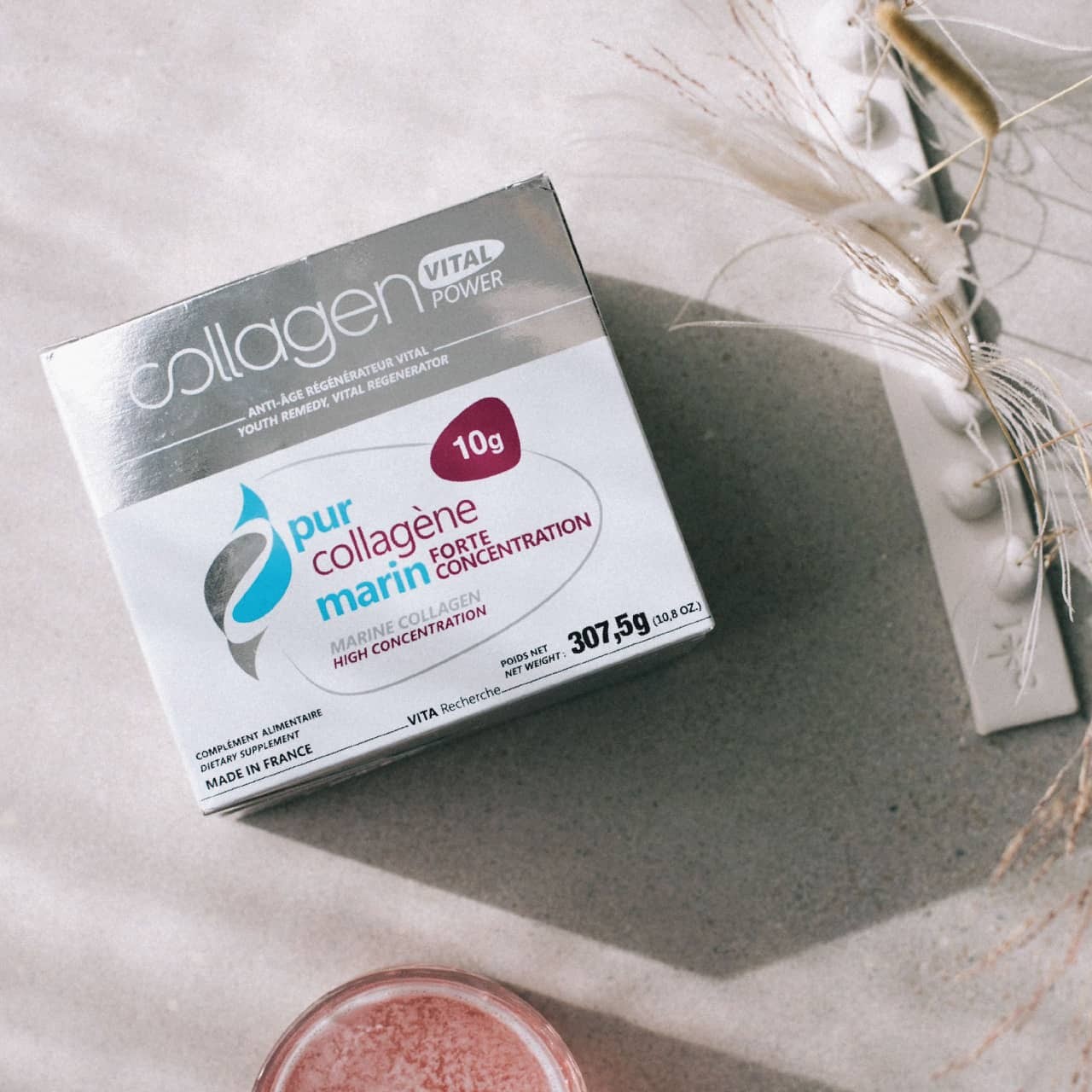
- Collagen Vital Power: the reference formula, to support tissues, joints and daily vitality.
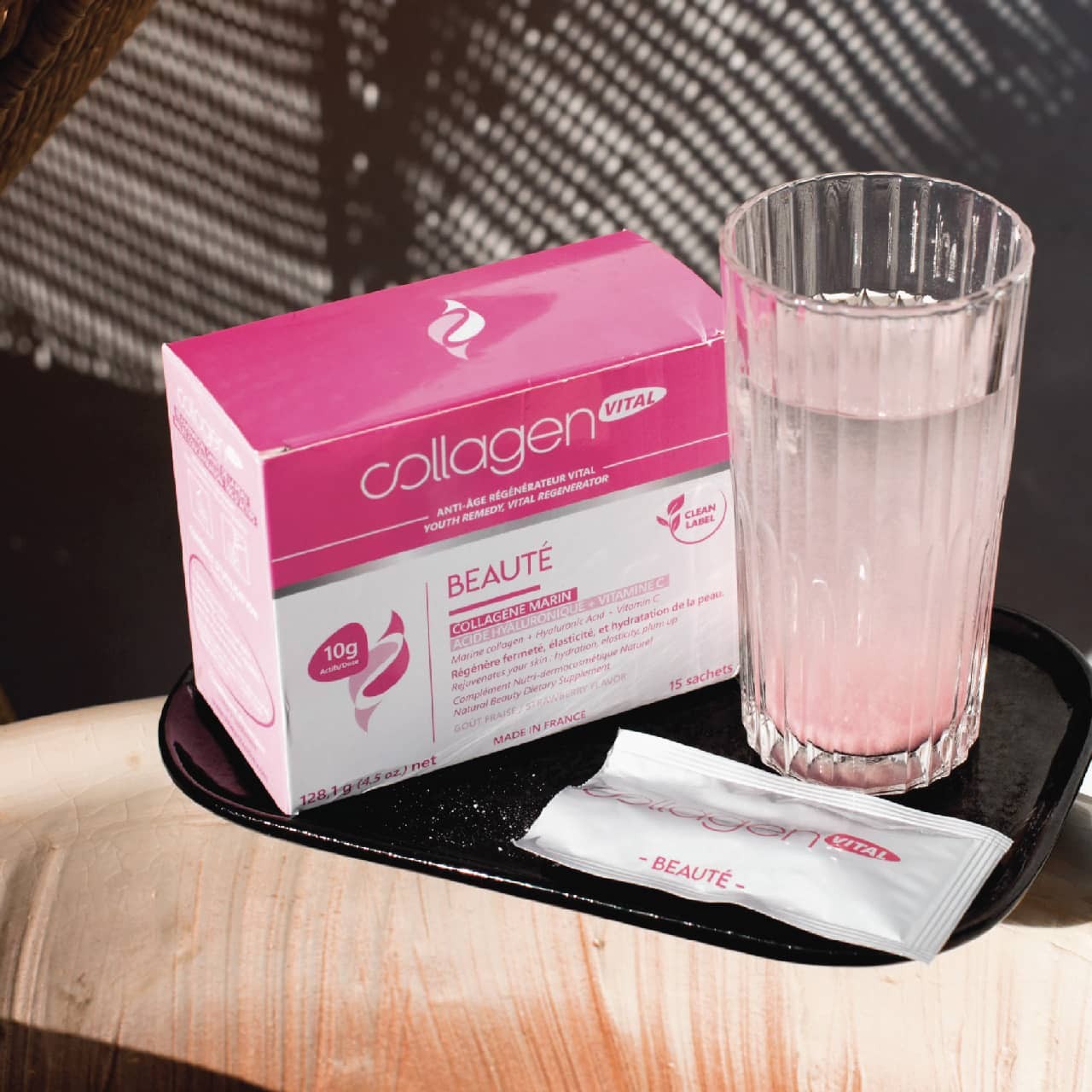
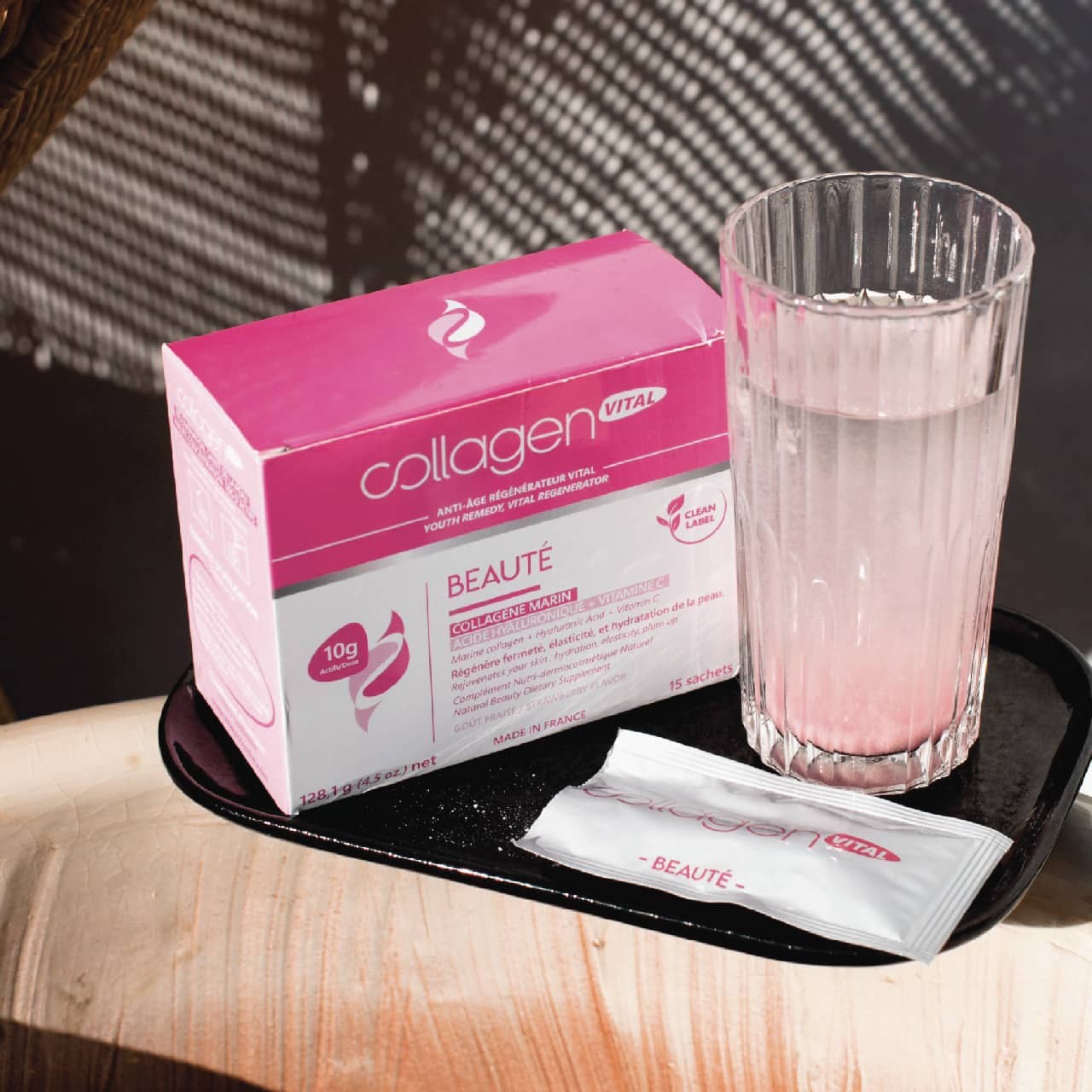
- Collagen Vital Beauty: dedicated to the skin, with hyaluronic acid and vitamin C.
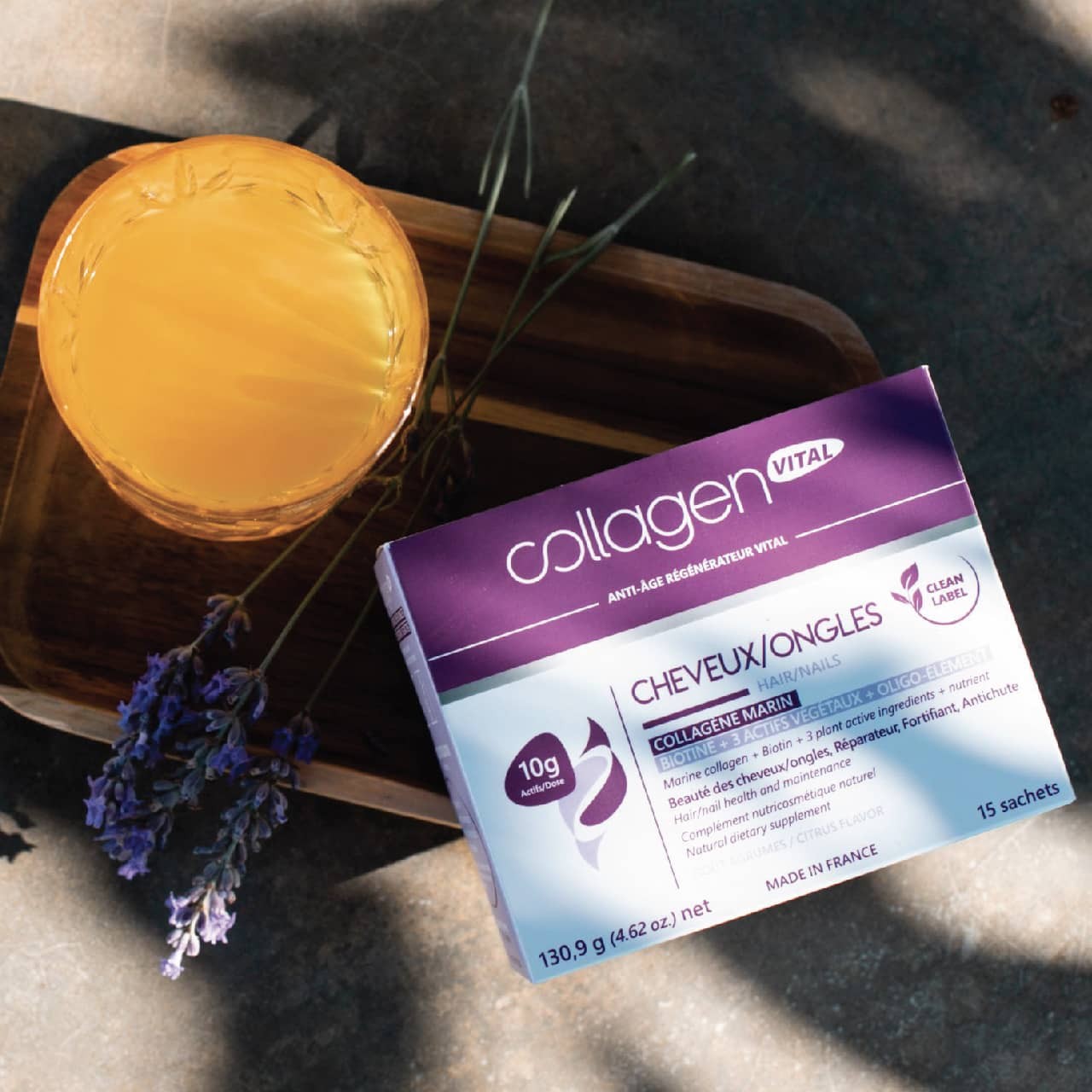
- Collagen Vital Hair & Nails: to support hair and nail quality.
Discover Collagen Vital Power ›
This In & Out approach is completed by Covéline dermo-cosmetic skincare, as described in our article Beauty In & Out: My Experience with Collagen Vital and Coveline. And to choose your course wisely, read Marine collagen: benefits, effectiveness and how to choose it well.
Main scientific references
- Myung SK, Park Y. Effects of Collagen Supplements on Skin Aging: A Systematic Review and Meta-Analysis of Randomized Controlled Trials. The American Journal of Medicine, 2025;138(9):1264-1277.
- Miranda RB, Weimer P, Rossi RC. Effects of hydrolyzed collagen supplementation on skin aging: a systematic review and meta-analysis. International Journal of Dermatology, 2021. 19 randomised trials, 1,125 participants.
- de Miranda RB et al. Effects of Oral Collagen for Skin Anti-Aging: A Systematic Review and Meta-Analysis. Systematic review of 26 randomised trials and 1,721 participants.
- Asserin J et al. The effect of oral collagen peptide supplementation on skin moisture and the dermal collagen network. Clinical work on collagen peptides and skin quality.
- Choi FD et al. Four-weeks daily intake of oral collagen hydrolysate results in improved skin elasticity, especially in sun-exposed areas: a randomized, double-blind, placebo-controlled trial. Journal of Dermatological Treatment, 2020.
- Johnson AD, Cuellar TL. Glycine and aging: Evidence and mechanisms. Ageing Research Reviews, 2023;87:101922. DOI: 10.1016/j.arr.2023.101922.
- Systematic review of glycine administration in humans, assessing the available data across various physiological systems and the geroprotective potential of glycine. The authors highlight the need for longer and more robust human trials.
Vita Recherche sources